Electrolyte drinks have become popular among athletes, outdoor workers, fitness enthusiasts, and people looking for alternatives to ordinary sports drinks. However, not everyone needs a specialized hydration beverage. For most healthy people performing routine daily activities, water and a balanced diet are usually sufficient.
The best electrolyte drink depends on your needs. Someone exercising for two hours in hot weather may benefit from a different beverage than someone sitting at a desk.
This complete guide explains what electrolyte drinks do, when they are useful, how commercial products compare, and how to prepare 10 measured homemade electrolyte drinks. You’ll also learn about sodium, potassium, sugar, hydration safety, and common mistakes.
Quick Answer
Drinks with electrolytes include sports drinks, oral rehydration solutions, coconut water, electrolyte powders, and homemade beverages containing measured amounts of sodium and other minerals. They can be useful during prolonged exercise, heavy sweating, or certain illnesses. For significant dehydration caused by diarrhea, a properly formulated oral rehydration solution is preferable to an ordinary homemade sports drink.
TL;DR
- Main electrolytes: Sodium, potassium, magnesium, and calcium.
- Best everyday hydration: Plain water for most healthy adults.
- Best for heavy sweating: A drink with appropriate sodium and fluid.
- Best for diarrhea-related dehydration: A properly prepared oral rehydration solution.
- Best natural potassium source: Coconut water is one option, though sodium content is usually low.
- Best lower-sugar option: Unsweetened electrolyte beverages with clearly labeled mineral amounts.
- Recipes included: Ten measured homemade drinks.
- Important: Electrolyte drinks are not all nutritionally equivalent.
1. What Are Drinks With Electrolytes?
Electrolyte drinks contain minerals that carry an electrical charge when dissolved in water.
These minerals participate in several important body functions, including hydration regulation, nerve signaling, and muscle contraction.
Main Electrolytes in the Body
| Electrolyte | Main Functions | Common Dietary Sources |
|---|---|---|
| Sodium | Fluid balance, nerve signaling | Salt, soups, salted foods |
| Potassium | Muscle and nerve function | Bananas, potatoes, coconut water |
| Magnesium | Muscle, nerve, and enzyme function | Nuts, seeds, legumes |
| Calcium | Muscle contraction, bones, nerve signaling | Dairy, fortified beverages |
| Chloride | Fluid and acid-base balance | Table salt, foods |
| Phosphate | Energy metabolism, cells, bones | Dairy, meat, legumes |
| Bicarbonate | Acid-base balance | Produced and regulated by the body |
Not every electrolyte beverage contains all these minerals.
Most sports drinks emphasize sodium, while some products also provide potassium, magnesium, or calcium.
Why Are Electrolytes Important?
Your body needs electrolytes to regulate water distribution between cells and surrounding fluids.
Losing significant fluid and sodium through sweat, vomiting, or diarrhea can affect hydration and normal body function.
2. How Do Electrolyte Drinks Work?
Electrolyte drinks provide fluid and dissolved minerals that can help replace substances lost through sweating or other fluid losses.
Sodium is especially important because it helps regulate fluid balance and is a major electrolyte lost in sweat.
What Happens When You Sweat?
Sweat contains water and electrolytes, particularly sodium and chloride.
The amount lost depends on several factors:
- Exercise intensity.
- Duration.
- Environmental temperature.
- Humidity.
- Individual sweat rate.
- Clothing and protective equipment.
- Heat acclimatization.
- Individual sweat sodium concentration.
People can lose very different amounts of fluid and sodium under similar conditions.
Why Do Some Drinks Contain Sugar?
Carbohydrates provide energy during prolonged exercise. Glucose also supports sodium and water absorption in the intestine, a principle used in properly formulated oral rehydration solutions.
However, the sugar concentration required for medical oral rehydration differs from that of many sports beverages.
A sweet sports drink should not automatically be considered an appropriate treatment for dehydration caused by diarrhea.
3. When Do You Actually Need Electrolyte Drinks?
Electrolyte drinks can be useful in specific situations, but drinking them constantly is unnecessary for most healthy adults.
Situations Where They May Help
- Prolonged endurance exercise.
- Heavy sweating in hot weather.
- Physically demanding outdoor work.
- Extended sports practices.
- Certain fluid losses under medical guidance.
- Recovery after significant sweat losses.
When Plain Water Is Usually Enough
- Routine desk work.
- Light walking.
- Short, low-intensity exercise.
- Normal daily activities.
- Meals with a balanced diet.
A Practical Hydration Comparison
| Situation | Common Starting Choice |
|---|---|
| Ordinary daily hydration | Water |
| Short, light workout | Water |
| Long workout with heavy sweating | Water plus an appropriate electrolyte strategy |
| Hot outdoor work | Scheduled hydration and sodium replacement as needed |
| Mild thirst after everyday activities | Water |
| Diarrhea with dehydration risk | Commercial ORS prepared as directed |
| Severe dehydration symptoms | Urgent medical evaluation |
Important: Excessive fluid intake can also be dangerous. During endurance activities, drinking far beyond thirst or individual fluid needs may contribute to exercise-associated hyponatremia.
4. Best Types of Electrolyte Drinks
Electrolyte beverages come in several forms. Their mineral concentrations, sugar levels, and intended uses differ.
Electrolyte Drink Categories
| Drink Type | Typical Characteristics | Main Consideration |
|---|---|---|
| Sports drinks | Fluid, sodium, often carbohydrates | Sugar and sodium vary |
| Electrolyte powders | Mix with water | Follow dilution instructions |
| Electrolyte tablets | Dissolve in water | Check mineral quantities |
| Oral rehydration solution | Carefully balanced glucose and salts | Intended for dehydration management |
| Coconut water | Naturally contains potassium | Usually relatively low in sodium |
| Electrolyte-enhanced water | Water with added minerals | Often low sodium |
| Homemade electrolyte drinks | Juice, water, measured salt | Composition varies |
| Milk | Fluid, potassium, calcium, protein | Dairy tolerance and storage |
| Broth | Water and sodium | Sodium can be high |
| Fruit smoothies | Fluid and minerals from ingredients | Often low in sodium |
Which Type Is Best?
For prolonged exercise, consider the amount of sodium and carbohydrates relative to your activity.
For everyday drinking, plain water is usually the simplest option.
For dehydration from diarrhea, use an appropriate oral rehydration solution rather than improvising a substitute.
5. Sodium, Potassium, Magnesium, and Calcium Explained
Different electrolytes have different functions, and adding more of every mineral does not necessarily improve hydration.
Sodium
Sodium is the primary electrolyte lost in sweat. It helps maintain extracellular fluid balance and supports nerve and muscle function.
Potassium
Potassium supports normal muscle and nerve activity. Fruits, vegetables, beans, and dairy products provide dietary potassium.
Magnesium
Magnesium participates in many enzyme reactions and contributes to normal muscle and nerve function.
Calcium
Calcium is essential for muscle contraction, nerve signaling, and bone health.
Do You Need All Four in One Drink?
Not necessarily. Most healthy people obtain adequate potassium, magnesium, and calcium through food.
For heavy sweating, replacing fluid and sodium is often a more immediate concern than obtaining a small amount of every mineral in a beverage.
People with kidney disease, heart failure, or conditions requiring sodium or potassium restrictions should not use electrolyte supplements indiscriminately.
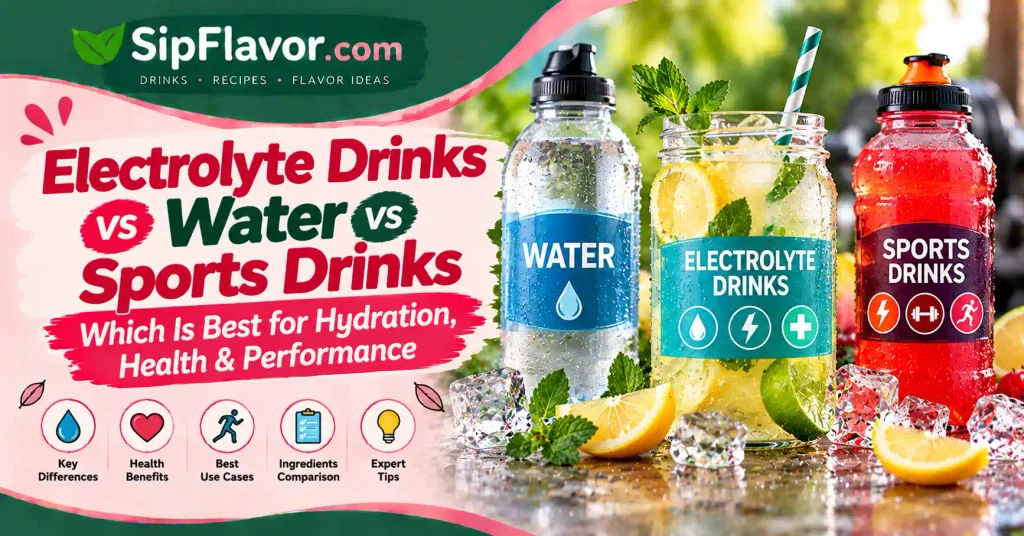
6. Electrolyte Drinks vs Water vs Sports Drinks
Water, sports drinks, and electrolyte products can all contribute to hydration, but they serve somewhat different purposes.
Comparison Table
| Feature | Plain Water | Sports Drink | Electrolyte Powder |
|---|---|---|---|
| Fluid | Yes | Yes | Yes, after mixing |
| Sodium | Usually minimal | Usually added | Varies |
| Potassium | Usually minimal | Sometimes added | Varies |
| Sugar | None | Often present | Varies |
| Calories | Zero | Varies | Varies |
| Everyday use | Suitable | Usually unnecessary | Depends on need |
| Exercise fueling | No carbohydrate | May provide carbohydrate | Product-dependent |
Is Electrolyte Water Better Than Regular Water?
Not automatically.
Electrolyte-enhanced water may be helpful when mineral replacement is needed, but plain water is appropriate for most everyday hydration.
Choose according to your activity, sweat losses, diet, and any medical advice.
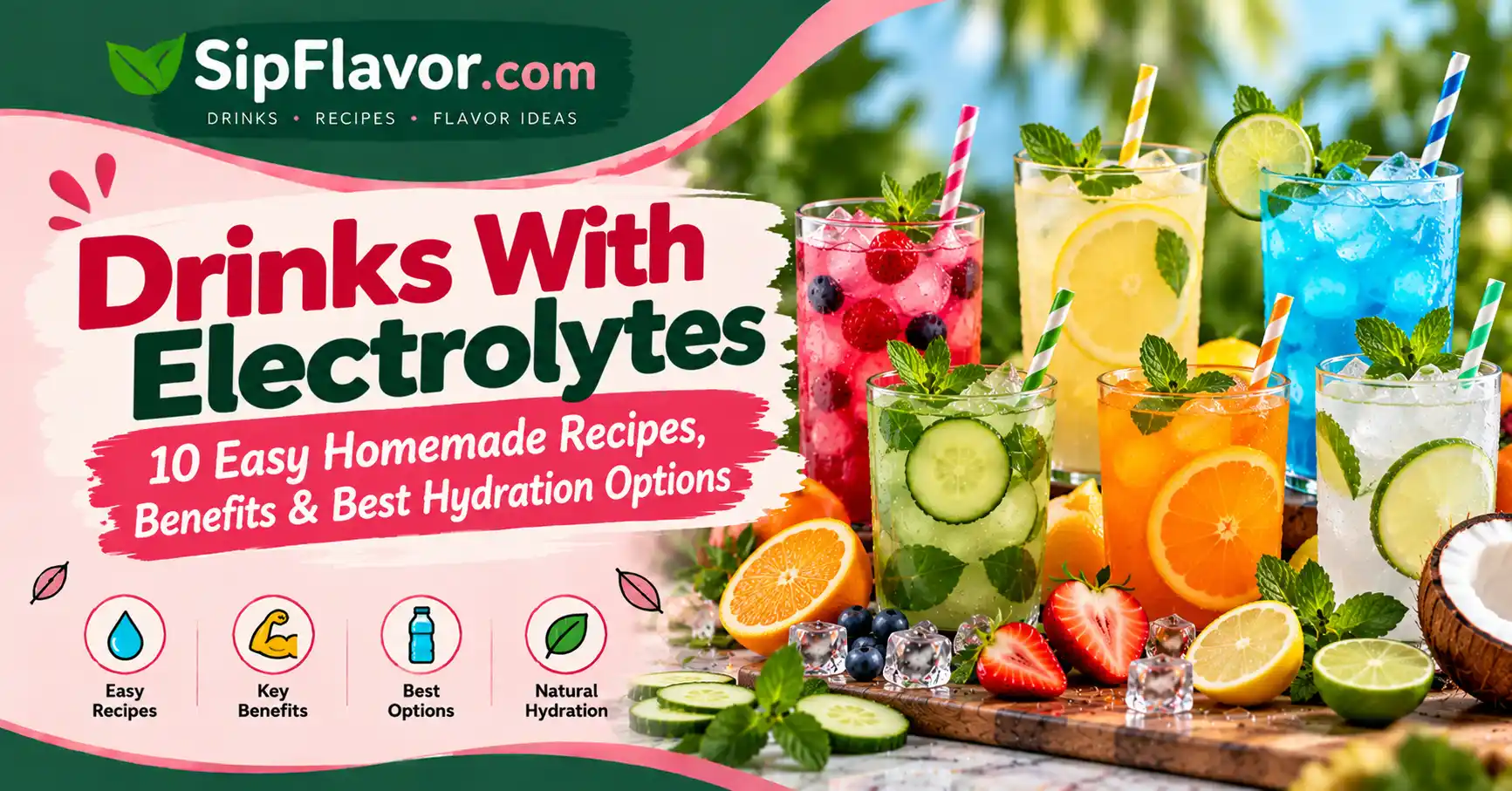
7. Ten Easy Homemade Electrolyte Drink Recipes
These recipes use familiar ingredients and measured quantities. They are intended as general beverages for healthy adults, not medical oral rehydration solutions.
The mineral content varies by ingredient brand, fruit size, juice concentration, and salt measurement. Therefore, no precise sodium or potassium claims are made without laboratory or label-based calculations.
Measurement note: One US cup equals 8 US fluid ounces. Recipe yields are approximate and exclude ice displacement, fruit pulp, and evaporation.
Recipe 1: Classic Lemon Salt Hydration Drink
Prep: 3 minutes | Servings: 2 | Yield: Approximately 16½ fl oz
Ingredients
- 16 fl oz cold water.
- ½ fl oz fresh lemon juice.
- 2 teaspoons granulated sugar.
- ⅛ teaspoon table salt.
- Ice, optional.
Instructions
- Pour water into a pitcher.
- Add lemon juice, sugar, and salt.
- Stir until dissolved.
- Chill and divide into two glasses.
Flavor: Lightly sweet, citrusy, and slightly salty.
Note: This is a homemade flavored hydration drink, not a substitute for a medical oral rehydration solution.
Recipe 2: Coconut Water Lime Refresher
Prep: 3 minutes | Servings: 2 | Yield: 16 fl oz
Ingredients
- 12 fl oz unsweetened coconut water.
- 3½ fl oz cold water.
- ½ fl oz fresh lime juice.
- 1 teaspoon honey, optional.
- Ice.
Instructions
- Combine coconut water, plain water, and lime juice.
- Stir in honey if desired.
- Serve over ice.
Flavor: Mildly sweet coconut with tart lime.
Electrolyte profile: Coconut water provides potassium, but this recipe is not designed for high sodium replacement.
Recipe 3: Orange Lemon Electrolyte Cooler

Prep: 5 minutes | Servings: 2 | Yield: 16 fl oz
Ingredients
- 8 fl oz orange juice.
- 7½ fl oz cold water.
- ½ fl oz lemon juice.
- ⅛ teaspoon table salt.
- Ice.
Instructions
- Combine orange juice and water.
- Add lemon juice and salt.
- Stir thoroughly.
- Chill and serve.
Flavor: Bright orange with a mild citrus tang.
Electrolyte profile: Orange juice supplies potassium, while table salt supplies sodium and chloride.
Recipe 4: Watermelon Lime Hydration Drink
Prep: 5 minutes | Servings: 2 | Yield: 16 fl oz
Ingredients
- 10 fl oz strained watermelon juice.
- 5½ fl oz cold water.
- ½ fl oz fresh lime juice.
- 1 small pinch table salt, approximately 1/32 teaspoon.
- Ice.
Instructions
- Blend watermelon and strain to obtain 10 fl oz juice.
- Combine with water and lime juice.
- Add the measured pinch of salt.
- Stir and serve cold.
Flavor: Light watermelon and fresh lime.
Recipe 5: Pineapple Coconut Electrolyte Drink
Prep: 3 minutes | Servings: 2 | Yield: 16 fl oz
Ingredients
- 8 fl oz unsweetened coconut water.
- 4 fl oz pineapple juice.
- 4 fl oz cold water.
- ⅛ teaspoon table salt.
- Ice.
Instructions
- Add coconut water, pineapple juice, and water to a pitcher.
- Stir in salt until dissolved.
- Serve chilled.
Flavor: Tropical pineapple and coconut.
Recipe 6: Strawberry Lemon Hydration Cooler
Prep: 5 minutes | Servings: 2 | Yield: 16 fl oz
Ingredients
- 3 fl oz strained strawberry puree.
- 12½ fl oz cold water.
- ½ fl oz lemon juice.
- 2 teaspoons sugar.
- ⅛ teaspoon table salt.
- Ice.
Instructions
- Blend strawberries and strain to obtain 3 fl oz puree.
- Mix puree with water and lemon juice.
- Add sugar and salt.
- Stir until dissolved.
- Serve over ice.
Flavor: Strawberry lemonade with mild saltiness.
Recipe 7: Cucumber Mint Electrolyte Water
Prep: 5 minutes | Servings: 2 | Yield: 16 fl oz
Ingredients
- 14 fl oz cold water.
- 1½ fl oz strained cucumber juice.
- ½ fl oz lime juice.
- 4 mint leaves.
- 1/16 teaspoon table salt.
- Ice.
Instructions
- Gently press mint leaves in a pitcher.
- Add water, cucumber juice, and lime juice.
- Stir in salt.
- Chill and serve.
Flavor: Crisp cucumber, mint, and lime.
Recipe 8: Apple Ginger Hydration Drink
Prep: 5 minutes | Servings: 2 | Yield: 16 fl oz
Ingredients
- 6 fl oz apple juice.
- 9½ fl oz cold water.
- ½ fl oz lemon juice.
- ¼ teaspoon finely grated fresh ginger.
- ⅛ teaspoon table salt.
- Ice.
Instructions
- Combine apple juice, water, and lemon juice.
- Add grated ginger.
- Stir in salt until dissolved.
- Strain if desired and serve chilled.
Flavor: Apple with a gentle ginger finish.
Recipe 9: Mango Orange Electrolyte Refresher
Prep: 5 minutes | Servings: 2 | Yield: 16 fl oz
Ingredients
- 4 fl oz strained mango nectar.
- 4 fl oz orange juice.
- 7½ fl oz cold water.
- ½ fl oz lime juice.
- ⅛ teaspoon table salt.
- Ice.
Instructions
- Combine mango nectar and orange juice.
- Add water and lime juice.
- Stir in salt.
- Chill and serve.
Flavor: Sweet tropical fruit with citrus.
Recipe 10: Berry Coconut Electrolyte Cooler
Prep: 5 minutes | Servings: 2 | Yield: 16 fl oz
Ingredients
- 8 fl oz unsweetened coconut water.
- 2 fl oz strained mixed berry puree.
- 5½ fl oz cold water.
- ½ fl oz lemon juice.
- 1/16 teaspoon table salt.
- Ice.
Instructions
- Blend berries and strain to obtain 2 fl oz puree.
- Combine with coconut water and plain water.
- Add lemon juice and salt.
- Stir and serve over ice.
Flavor: Berry-forward with light coconut notes.
Homemade Electrolyte Recipe Comparison
| Recipe | Main Electrolyte Sources | Yield |
|---|---|---|
| Lemon Salt Drink | Table salt | Approx. 16½ oz |
| Coconut Lime | Coconut water | 16 oz |
| Orange Lemon | Orange juice, salt | 16 oz |
| Watermelon Lime | Watermelon, small amount of salt | 16 oz |
| Pineapple Coconut | Coconut water, salt | 16 oz |
| Strawberry Lemon | Fruit, salt | 16 oz |
| Cucumber Mint | Salt, cucumber | 16 oz |
| Apple Ginger | Apple juice, salt | 16 oz |
| Mango Orange | Fruit juice, salt | 16 oz |
| Berry Coconut | Coconut water, salt | 16 oz |
Recipe safety: These beverages have not been standardized for electrolyte concentration. They should not be used to treat dehydration caused by diarrhea, vomiting, or serious illness.
8. How to Make Electrolyte Drinks Without Added Sugar
Some people prefer electrolyte drinks without added sugar, especially for ordinary hydration.
You can make lightly flavored water with a small amount of salt and citrus, but the result is not equivalent to a commercial sports drink or medical oral rehydration solution.
Simple Unsweetened Citrus Drink
Ingredients
- 16 fl oz cold water.
- ½ fl oz lemon juice.
- 1/16 teaspoon table salt.
- Ice.
Method: Stir all ingredients until the salt dissolves. Serve chilled.
Other Lower-Sugar Ideas
- Unsweetened coconut water diluted with water.
- Water with cucumber and mint.
- Unsweetened herbal tea with lemon.
- Plain water with a squeeze of citrus.
- Commercial sugar-free electrolyte products used according to label directions.
Does Sugar Help Hydration?
Sugar is not required in every hydration beverage. However, glucose plays an important role in properly formulated oral rehydration solutions used for diarrheal dehydration.
Do not replace prescribed or recommended ORS with a sugar-free homemade mixture when treating illness-related dehydration.
9. Electrolyte Drinks for Exercise and Sports
During exercise, fluid and sodium losses depend on duration, intensity, heat, and individual sweat characteristics.
A short workout may not require anything beyond water. Longer or more demanding exercise may justify a more structured hydration plan.
Exercise Hydration Considerations
| Activity | General Consideration |
|---|---|
| 20-minute walk | Water as needed |
| 30-minute light workout | Water usually sufficient |
| 60-minute moderate workout | Depends on heat and sweating |
| 90-minute intense workout | Electrolytes may be useful |
| Multi-hour endurance event | Individual fluid, sodium, and fueling strategy |
| Heavy outdoor labor | Heat-specific hydration planning |
What Makes a Good Sports Drink?
A sports drink should match the activity rather than simply contain the largest amount of electrolytes.
Consider sodium concentration, carbohydrate needs, serving size, taste, and stomach tolerance.
Excessively concentrated drinks can cause digestive discomfort.
10. Electrolyte Drinks for Hot Weather and Heavy Sweating
Hot weather increases the likelihood of substantial sweat losses, particularly during outdoor work and exercise.
Fluid replacement should be combined with rest, shade, cooling, and appropriate work practices.
Signs You May Need to Reassess Hydration
- Increased thirst.
- Heavy sweating.
- Darker urine than usual.
- Headache.
- Fatigue.
- Reduced exercise tolerance.
These signs are not specific diagnoses. Severe heat illness requires urgent attention.
Heat Safety Tips
- Begin activity adequately hydrated.
- Drink regularly according to conditions and individual needs.
- Take cooling breaks.
- Wear appropriate clothing.
- Replace sodium when substantial sweat losses warrant it.
- Avoid relying on energy drinks for hydration.
- Watch for symptoms of heat exhaustion and heat stroke.
Emergency warning: Confusion, collapse, seizures, or altered consciousness during heat exposure may indicate heat stroke. Call emergency services and begin rapid cooling.
11. Electrolyte Drinks for Illness and Dehydration
Dehydration from vomiting or diarrhea is different from ordinary thirst after exercise.
When diarrhea causes significant fluid loss, the body can lose water and important salts.
Why Oral Rehydration Solution Matters
A properly formulated oral rehydration solution (ORS) contains specific proportions of glucose and electrolytes designed to support fluid absorption.
Commercial ORS products are manufactured for this purpose. Sports drinks, coconut water, and homemade fruit beverages are not equivalent substitutes.
When to Seek Medical Care
Seek medical advice for persistent vomiting, inability to keep fluids down, signs of significant dehydration, or worsening illness.
Urgent assessment is especially important for infants, older adults, and people with underlying medical conditions.
Severe dehydration may require intravenous fluids.
Important Safety Rule
For infants and young children with diarrhea, use age-appropriate medical guidance rather than homemade electrolyte drinks.
12. Coconut Water vs Sports Drinks vs Electrolyte Powders
Coconut water is frequently described as a natural electrolyte drink because it contains potassium.
However, it usually provides less sodium than many sports hydration products.
Comparison
| Feature | Coconut Water | Sports Drink | Electrolyte Powder |
|---|---|---|---|
| Potassium | Often relatively high | Varies | Varies |
| Sodium | Usually relatively low | Often added | Varies widely |
| Sugar | Naturally occurring | Often added | May be zero or added |
| Convenience | Ready to drink | Ready to drink | Requires mixing |
| Best use | General beverage | Exercise-related needs | Depends on formula |
Is Coconut Water Better?
Not automatically.
Coconut water can be a pleasant beverage and potassium source, but it may not provide enough sodium for substantial sweat replacement.
Read product labels and consider the reason you want an electrolyte drink.
13. How to Read Electrolyte Drink Nutrition Labels
Marketing phrases such as hydration boost, advanced electrolytes, or rapid hydration don’t tell you exactly how much sodium or potassium a drink contains.
The Nutrition Facts label is more useful.
What to Check
- Serving size.
- Sodium in milligrams.
- Potassium in milligrams.
- Added sugars.
- Total carbohydrates.
- Calories.
- Caffeine, if present.
- Directions for mixing.
- Number of servings per package.
Why Serving Size Matters
A packet may list minerals for one serving but be intended for a specific water volume.
Adding too little water creates a more concentrated beverage than intended.
Follow the manufacturer’s dilution instructions, especially for medical ORS products.
14. Electrolyte Drink Storage and Food Safety
Homemade drinks containing fresh fruit, juice, or coconut water should be handled as perishable beverages.
Storage Tips
- Wash produce before preparation.
- Use clean utensils and containers.
- Refrigerate prepared drinks promptly.
- Keep refrigerated drinks at 40°F (4°C) or below.
- Avoid leaving perishable beverages at room temperature beyond two hours.
- In temperatures above 90°F (32°C), limit unrefrigerated time to one hour.
- Discard beverages with unusual odors, visible spoilage, or questionable storage history.
Can You Make Electrolyte Drinks Ahead?
Yes, but freshly prepared beverages generally offer the best flavor.
For gatherings, prepare small batches and keep them refrigerated until serving.
Do not assume a homemade drink is shelf-stable because it contains salt or citrus.
15. Electrolyte Drink Risks and Common Mistakes
More electrolytes do not always mean better hydration. Excessive sodium, potassium, or fluid intake can cause problems, especially for people with certain medical conditions.
Common Mistakes
- Assuming every workout requires electrolytes.
- Drinking large quantities without considering total fluid intake.
- Treating sports drinks as medical ORS.
- Using concentrated electrolyte powders incorrectly.
- Adding salt without measuring.
- Assuming coconut water provides substantial sodium.
- Ignoring added sugar.
- Using electrolyte drinks instead of food and water.
- Combining multiple electrolyte supplements unnecessarily.
- Ignoring kidney or heart-related dietary restrictions.
- Giving homemade rehydration mixtures to sick infants.
- Assuming thirst is the only possible sign of serious heat illness.
Who Should Be Especially Careful?
People with kidney disease, heart failure, certain blood pressure conditions, or medications affecting sodium or potassium balance should seek medical guidance before using concentrated electrolyte products.
Can You Drink Too Many Electrolytes?
Yes. Excessive intake of certain electrolytes can disturb normal mineral balance.
Overdrinking fluid during prolonged exercise can also dilute blood sodium and cause potentially dangerous hyponatremia.
16. Frequently Asked Questions About Drinks With Electrolytes
What drinks have the most electrolytes?
Electrolyte concentrations vary widely. Some commercial powders and oral rehydration solutions contain substantial sodium, while coconut water often provides more potassium than sodium. Compare actual milligrams per serving.
What is the best natural electrolyte drink?
Coconut water contains potassium, and milk contains several minerals. However, the best drink depends on the electrolyte you need to replace.
Is lemon water an electrolyte drink?
Lemon water contains small amounts of minerals, but plain lemon water generally does not provide substantial sodium. Adding measured salt changes its electrolyte content.
Do electrolyte drinks hydrate better than water?
They may be useful when significant electrolyte losses occur, such as prolonged heavy sweating. For routine daily hydration, water is usually sufficient.
Can I drink electrolytes every day?
Many people can consume ordinary foods and drinks containing electrolytes daily. Concentrated electrolyte supplements are not necessarily needed every day, especially when medical restrictions apply.
Are electrolyte drinks good for weight loss?
Electrolyte drinks do not directly cause weight loss. Low-calorie options may replace higher-calorie beverages, but hydration products are not weight-loss treatments.
Is coconut water better than sports drinks?
Coconut water often provides potassium but relatively little sodium. Sports drinks may be more appropriate for certain exercise-related sodium losses.
Can children drink homemade electrolyte drinks?
For ordinary healthy children, water and a balanced diet are generally appropriate. For illness-related dehydration, use pediatric medical guidance and properly formulated ORS rather than homemade mixtures.
Do electrolyte drinks contain caffeine?
Some do, but many do not. Always check the ingredient label.
Can too much water lower sodium?
Yes. Excessive water consumption, particularly during prolonged exercise, can contribute to dangerously low blood sodium.
What is the difference between an electrolyte drink and ORS?
An electrolyte drink is a broad category. ORS is specifically formulated with appropriate glucose and electrolyte concentrations for managing dehydration, particularly from diarrhea.
Conclusion
Drinks with electrolytes can help replace minerals and fluid lost during prolonged exercise, heavy sweating, or certain illnesses. However, their usefulness depends on the situation and the actual mineral content.
For everyday hydration, plain water and a balanced diet are sufficient for many healthy adults. During substantial sweat loss, an appropriately formulated sports drink or electrolyte product may be useful. For diarrhea-related dehydration, choose a properly prepared oral rehydration solution rather than an ordinary homemade drink.