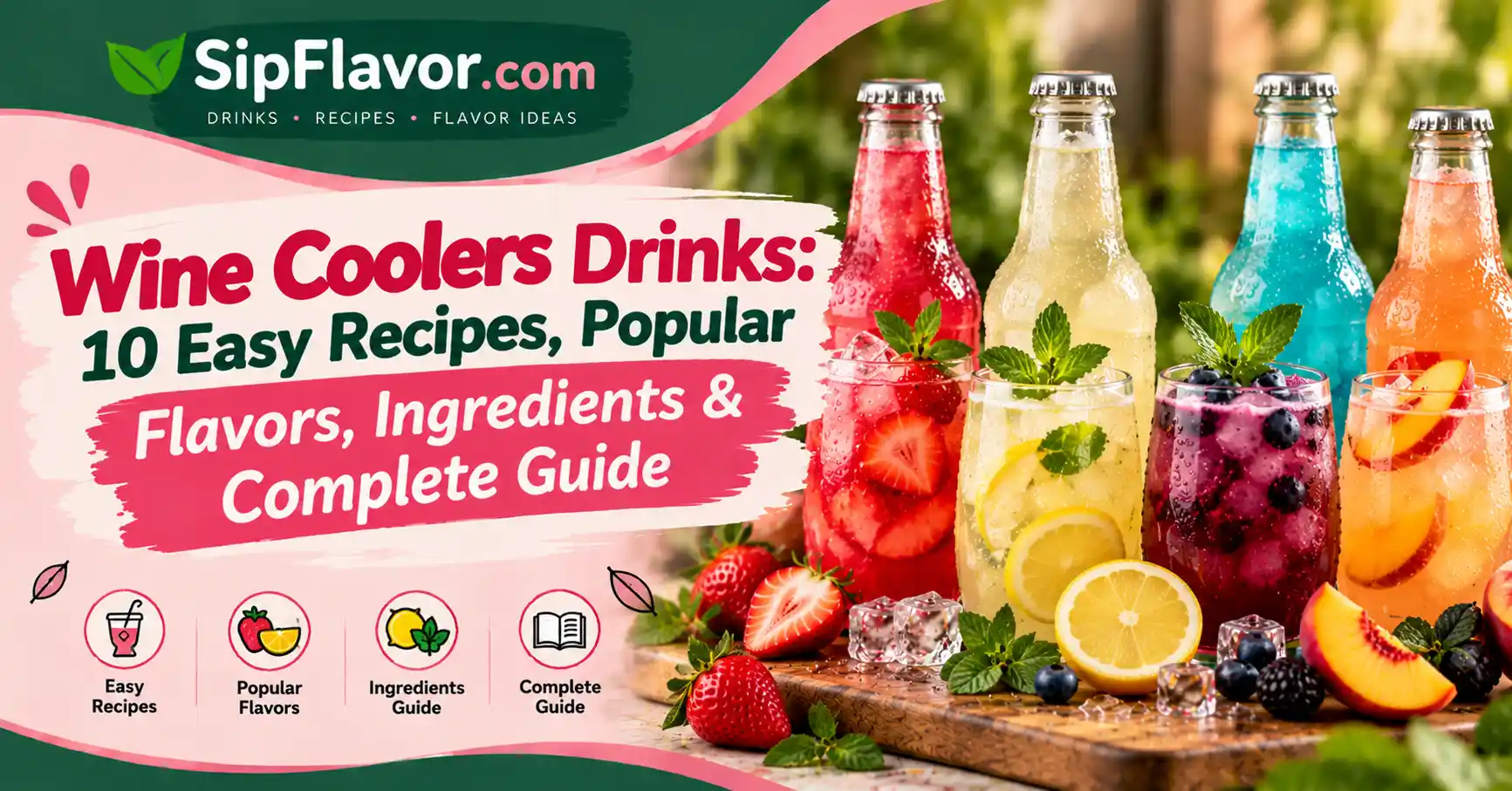
Today, the term wine cooler can refer to several types of beverages, including traditional wine-based coolers, flavored malt beverages marketed in a similar style, and homemade wine spritzers.
If you’ve ever wondered what wine coolers are, how much alcohol they contain, how they compare with hard seltzers, or how to make them at home, this guide explains the essentials.
You’ll also find 10 fully measured homemade wine cooler recipes, comparisons of common flavors, ingredient recommendations, serving suggestions, and important alcohol-safety information.
Quick Answer
A wine cooler is traditionally an alcoholic drink made with wine, fruit juice or flavorings, and often a carbonated mixer. Many commercial products sold in the same category use a malt-based or other alcohol base rather than wine, so ingredients vary by brand. Popular flavors include strawberry, peach, citrus, raspberry, and tropical fruit.
TL;DR
- Traditional wine cooler: Wine mixed with juice and sometimes soda.
- Typical flavors: Peach, strawberry, citrus, berry, and tropical fruit.
- Alcohol content: Varies by recipe and product; check the ABV.
- Wine cooler vs wine spritzer: Both can combine wine and sparkling mixers.
- Wine cooler vs hard seltzer: The alcohol base and flavor formulation may differ.
- Homemade recipes: Ten measured wine-based options.
- Nonalcoholic alternatives: Fruit juice and sparkling water.
- Important: A sweet, refreshing taste does not mean a drink is low in alcohol.
1. What Are Wine Coolers Drinks?
Wine coolers are beverages traditionally prepared by mixing wine with fruit juice, soda, or other flavoring ingredients.
The result is often lighter-tasting and more fruit-forward than drinking wine by itself.
The name became particularly popular in the United States during the 1980s, when commercially bottled wine coolers gained widespread attention.
Common Characteristics
- Wine or another alcoholic beverage base.
- Fruit-inspired flavors.
- Sweet or sweet-tart taste.
- Often served chilled.
- Sometimes carbonated.
- Frequently sold in individual bottles or cans.
- Usually intended as a refreshing alternative to straight wine.
Are All Wine Coolers Made With Wine?
No.
Some modern products marketed or discussed as wine coolers are actually flavored malt beverages, while others may use different alcoholic bases.
This distinction matters because alcohol content, ingredients, taxation, and labeling can differ.
Always read the package to determine what the beverage actually contains.
2. History of Wine Coolers in the United States
Wine coolers became especially prominent in American beverage culture during the 1980s.
Their popularity was linked to fruit flavors, convenient packaging, and a drinking experience that appealed to consumers seeking something different from traditional wine or beer.
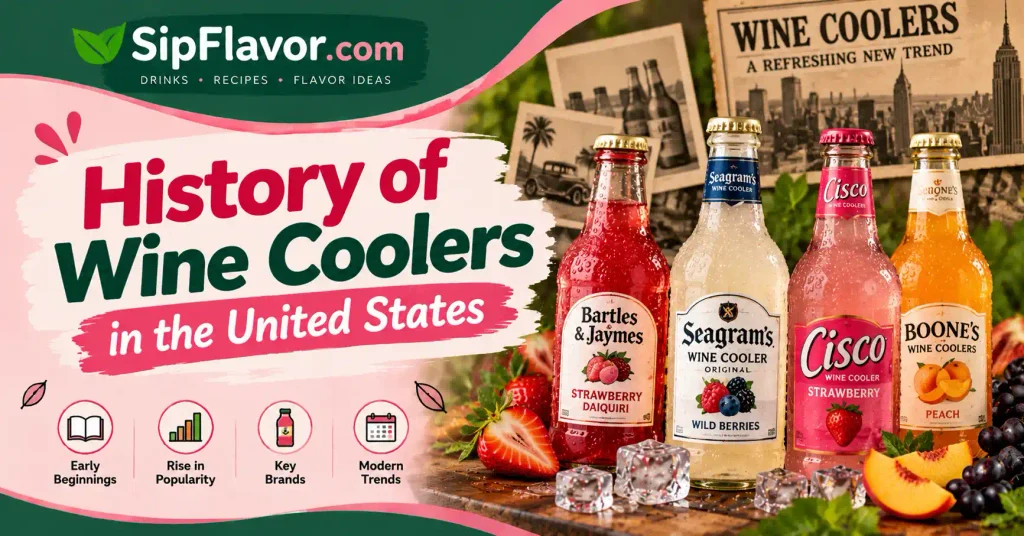
The 1980s Wine Cooler Era
Early commercial wine coolers commonly combined wine with fruit flavors and carbonation.
Brands such as Bartles & Jaymes and California Cooler became associated with the category.
Advertising and convenient packaging helped wine coolers become familiar at social gatherings.
Why Did Wine Coolers Change?
Changes in US federal alcohol taxation in the early 1990s affected the economics of wine-based coolers.
Many producers shifted toward malt-based formulations, which helped reshape the category.
Wine Coolers Today
The original wine cooler concept continues through homemade recipes, wine spritzers, and selected packaged products.
However, not every contemporary fruit-flavored alcoholic beverage is legally or technically a wine cooler.
3. Wine Cooler Ingredients Explained
A traditional homemade wine cooler usually combines a wine base with fruit juice and a lighter mixer.
The ingredient proportions determine sweetness, acidity, carbonation, and alcohol concentration.
Common Ingredients
| Ingredient | Purpose |
|---|---|
| White wine | Light, crisp alcoholic base |
| Rosé wine | Fruity, pink-colored base |
| Red wine | Richer fruit and tannin flavors |
| Lemon juice | Adds acidity |
| Orange juice | Provides citrus sweetness |
| Cranberry juice | Adds tart fruit flavor |
| Peach nectar | Creates a soft, fruity profile |
| Sparkling water | Adds bubbles and dilution |
| Lemon-lime soda | Adds sweetness and carbonation |
| Fresh berries | Garnish and fruit flavor |
| Ice | Chills and dilutes the drink |
What Wine Works Best?
Dry white wines, lighter rosés, and fruit-forward reds can all work.
A very expensive bottle is unnecessary for a mixed drink. Choose a wine you enjoy and match it with complementary ingredients.
Does a Wine Cooler Need Sugar?
Not necessarily.
Sweetness can come from juice, soda, or the wine itself. You can use unsweetened mixers to create a less-sweet version.
4. Popular Wine Cooler Flavors
Wine cooler flavors typically emphasize approachable fruit combinations.
Citrus and berry profiles are particularly common because their acidity balances sweetness.
Flavor Comparison
| Flavor | Typical Ingredients | Taste Profile |
|---|---|---|
| Strawberry | Strawberry, lemon, wine | Sweet and fruity |
| Peach | Peach nectar, white wine | Soft and juicy |
| Raspberry | Raspberry, lime, rosé | Sweet-tart |
| Tropical | Pineapple, mango, wine | Sweet and tropical |
| Citrus | Orange, lemon, white wine | Bright and refreshing |
| Cranberry | Cranberry, lime, rosé | Tart and crisp |
| Watermelon | Watermelon, lime, rosé | Light and summery |
| Apple | Apple juice, white wine | Crisp and mellow |
| Blackberry | Blackberry, lemon, red wine | Rich and fruity |
| Grapefruit | Grapefruit, sparkling water, rosé | Tart and refreshing |
Which Flavor Is Best?
Peach and strawberry appeal to people who enjoy sweeter drinks.
Cranberry and grapefruit are better suited to those who prefer tart flavors.
For a lighter beverage, use sparkling water rather than sweet soda.
5. Wine Coolers vs Wine Spritzers vs Hard Seltzers
Wine coolers, wine spritzers, and hard seltzers may look similar, but their ingredients and alcohol bases can differ.
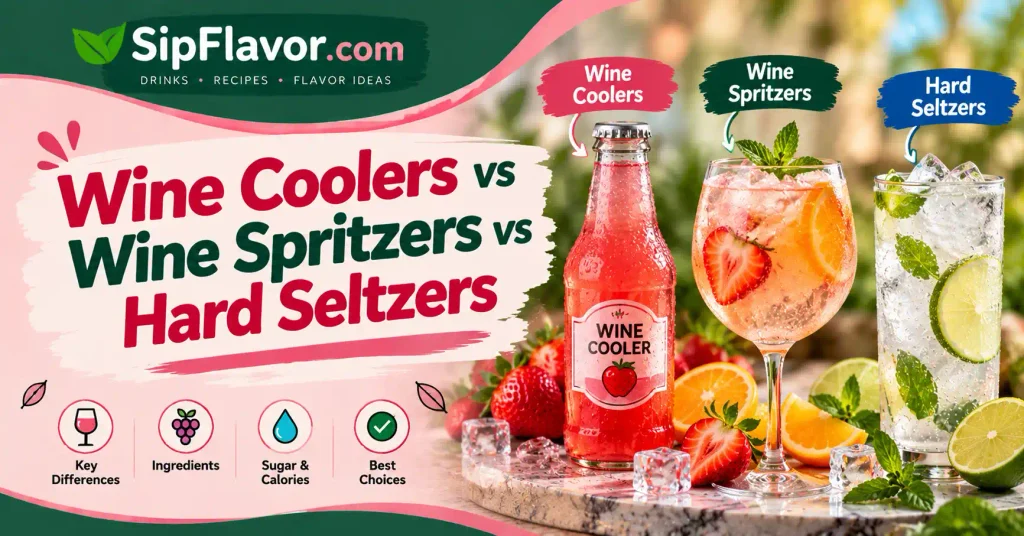
Comparison Table
| Feature | Wine Cooler | Wine Spritzer | Hard Seltzer |
|---|---|---|---|
| Traditional alcohol base | Wine | Wine | Fermented sugar, malt, or spirits depending on product |
| Fruit flavors | Common | Optional | Common |
| Carbonation | Often | Usually | Usually |
| Sweetness | Varies | Often relatively low | Varies |
| Alcohol content | Varies | Depends on wine ratio | Depends on brand |
| Homemade preparation | Easy | Easy | Not generally made by simply mixing ingredients |
Wine Cooler vs Spritzer
A spritzer is commonly wine mixed with sparkling water.
A wine cooler often includes additional fruit juice or flavorings, although there is considerable overlap.
Wine Cooler vs Hard Seltzer
Hard seltzer usually uses a fermented or distilled alcohol base with carbonated water and flavorings.
A traditional wine cooler specifically uses wine.
Important: Don’t assume two drinks with similar flavors contain the same alcohol quantity.
6. How Much Alcohol Is in Wine Coolers?
Alcohol by volume, or ABV, describes the percentage of a beverage’s volume that is alcohol.
Wine coolers vary in ABV because different products use different alcohol bases and mixing ratios.
Typical Alcohol Considerations
- Commercial coolers may be around 4–7% ABV, but products outside this range exist.
- Homemade wine coolers depend on the original wine’s ABV and the quantity of nonalcoholic mixers.
- Ice melting changes concentration but not the original amount of alcohol.
- Larger servings can contain more alcohol even when the ABV is relatively low.
Example: Homemade Wine Cooler
Suppose a drink contains:
- 3 fl oz wine at 12% ABV.
- 2 fl oz fruit juice.
- 3 fl oz sparkling water.
The wine contributes:
3 × 0.12 = 0.36 fl oz pure alcohol.
The measured drink volume is 8 fl oz.
Estimated ABV before ice dilution:
0.36 ÷ 8 × 100 = 4.5% ABV.
This example illustrates why measuring ingredients matters.
Standard Drink Comparison
In the United States, one standard alcoholic drink contains approximately 0.6 fl oz of pure alcohol.
The example above contains approximately 0.6 US standard drinks.
7. Ten Easy Homemade Wine Cooler Recipes
The following recipes are designed as single-serving, wine-based drinks using standard US fluid-ounce measurements.
All ten recipes contain alcohol and are intended only for adults of legal drinking age.
Yield note: Volumes refer to measured liquid ingredients before ice, garnishes, and melting. Wine ABV varies, so the finished alcohol concentration also varies.
Recipe 1: Classic White Wine Citrus Cooler
Prep: 3 minutes | Servings: 1 | Yield: 8 fl oz
Ingredients
- 3 fl oz chilled dry white wine.
- 2 fl oz orange juice.
- ½ fl oz fresh lemon juice.
- 2½ fl oz sparkling water.
- Ice.
- Orange slice.
Instructions
- Fill a tall glass with ice.
- Add white wine, orange juice, and lemon juice.
- Pour in sparkling water.
- Stir gently.
- Garnish with orange.
Flavor: Crisp citrus with light wine notes.
Recipe 2: Strawberry Rosé Wine Cooler
Prep: 5 minutes | Servings: 1 | Yield: 8 fl oz
Ingredients
- 3 fl oz chilled rosé wine.
- 2 fl oz strained strawberry puree.
- ½ fl oz lemon juice.
- 2½ fl oz sparkling water.
- Ice.
- Fresh strawberry.
Instructions
- Blend strawberries and strain to obtain 2 fl oz puree.
- Combine puree, rosé, and lemon juice in a glass.
- Add ice.
- Top with sparkling water.
- Stir gently and garnish.
Flavor: Fresh strawberry with bright citrus.
Recipe 3: Peach White Wine Cooler
Prep: 3 minutes | Servings: 1 | Yield: 8 fl oz
Ingredients
- 3 fl oz chilled white wine.
- 2 fl oz peach nectar.
- ½ fl oz fresh lime juice.
- 2½ fl oz chilled sparkling water.
- Ice.
- Peach slice.
Instructions
- Add wine, peach nectar, and lime juice to a glass.
- Fill with ice.
- Add sparkling water.
- Stir gently.
- Garnish with peach.
Flavor: Soft peach sweetness with a crisp finish.
Recipe 4: Cranberry Lime Rosé Cooler
Prep: 3 minutes | Servings: 1 | Yield: 8 fl oz
Ingredients
- 3 fl oz rosé wine.
- 2 fl oz cranberry juice cocktail.
- ½ fl oz lime juice.
- 2½ fl oz sparkling water.
- Ice.
- Lime wheel.
Instructions
- Combine rosé, cranberry juice, and lime juice.
- Add ice.
- Pour in sparkling water.
- Stir lightly and garnish.
Flavor: Tart cranberry and refreshing lime.
Recipe 5: Tropical Pineapple Wine Cooler
Prep: 3 minutes | Servings: 1 | Yield: 8 fl oz
Ingredients
- 3 fl oz chilled white wine.
- 2 fl oz pineapple juice.
- ½ fl oz lime juice.
- 2½ fl oz sparkling water.
- Ice.
- Pineapple wedge.
Instructions
- Add wine, pineapple juice, and lime juice to a glass.
- Fill with ice.
- Top with sparkling water.
- Stir gently and garnish.
Flavor: Tropical pineapple and citrus.
Recipe 6: Raspberry Lemon Wine Cooler
Prep: 5 minutes | Servings: 1 | Yield: 8 fl oz
Ingredients
- 3 fl oz chilled rosé.
- 1½ fl oz strained raspberry puree.
- ½ fl oz lemon juice.
- 3 fl oz sparkling water.
- Ice.
- Fresh raspberries.
Instructions
- Combine rosé, raspberry puree, and lemon juice.
- Add ice.
- Pour in sparkling water.
- Stir gently.
- Garnish with raspberries.
Flavor: Sweet-tart raspberry and lemon.
Recipe 7: Watermelon Rosé Cooler
Prep: 5 minutes | Servings: 1 | Yield: 8 fl oz
Ingredients
- 3 fl oz chilled rosé.
- 2½ fl oz strained watermelon juice.
- ½ fl oz lime juice.
- 2 fl oz sparkling water.
- Ice.
- Mint sprig.
Instructions
- Combine rosé, watermelon juice, and lime juice.
- Add ice.
- Top with sparkling water.
- Stir gently.
- Garnish with mint.
Flavor: Light watermelon with crisp lime.
Recipe 8: Apple Ginger Wine Cooler
Prep: 3 minutes | Servings: 1 | Yield: 8 fl oz
Ingredients
- 3 fl oz chilled white wine.
- 2 fl oz apple juice.
- ½ fl oz lemon juice.
- 2½ fl oz ginger ale.
- Ice.
- Thin apple slice.
Instructions
- Add wine, apple juice, and lemon juice to a glass.
- Fill with ice.
- Add ginger ale.
- Stir gently and garnish.
Flavor: Crisp apple and mild ginger spice.
Recipe 9: Blackberry Red Wine Cooler
Prep: 5 minutes | Servings: 1 | Yield: 8 fl oz
Ingredients
- 3 fl oz chilled light-bodied red wine.
- 1½ fl oz strained blackberry puree.
- ½ fl oz lemon juice.
- 3 fl oz sparkling water.
- Ice.
- Fresh blackberries.
Instructions
- Mix red wine, blackberry puree, and lemon juice.
- Add ice.
- Top with sparkling water.
- Stir gently.
- Garnish with blackberries.
Flavor: Rich berry fruit with light acidity.
Recipe 10: Grapefruit Rosé Wine Cooler
Prep: 3 minutes | Servings: 1 | Yield: 8 fl oz
Ingredients
- 3 fl oz chilled rosé.
- 2 fl oz grapefruit juice.
- ½ fl oz fresh lime juice.
- 2½ fl oz sparkling water.
- Ice.
- Grapefruit wedge.
Instructions
- Add rosé, grapefruit juice, and lime juice to a glass.
- Fill with ice.
- Pour in sparkling water.
- Stir gently and garnish.
Flavor: Bright grapefruit with a crisp rosé finish.
Medication caution: Grapefruit can interact with certain medications. Choose a different flavor when grapefruit avoidance is recommended.
All 10 Wine Cooler Recipes Compared
| Recipe | Wine Base | Fruit Flavor | Yield |
|---|---|---|---|
| Classic Citrus | White | Orange, lemon | 8 oz |
| Strawberry Rosé | Rosé | Strawberry | 8 oz |
| Peach | White | Peach | 8 oz |
| Cranberry Lime | Rosé | Cranberry | 8 oz |
| Tropical Pineapple | White | Pineapple | 8 oz |
| Raspberry Lemon | Rosé | Raspberry | 8 oz |
| Watermelon | Rosé | Watermelon | 8 oz |
| Apple Ginger | White | Apple, ginger | 8 oz |
| Blackberry | Red | Blackberry | 8 oz |
| Grapefruit | Rosé | Grapefruit | 8 oz |
Alcohol calculation: If the wine is 12% ABV, each recipe’s 3 fl oz wine contributes approximately 0.36 fl oz pure alcohol, equivalent to 0.6 US standard drinks. Actual values depend on the wine used.
8. Best Wines for Homemade Wine Coolers
The wine you choose influences sweetness, acidity, color, and flavor.
For most homemade coolers, lighter wines with fresh fruit characteristics are easier to combine with juice and sparkling water.
White Wine Options
- Pinot Grigio.
- Sauvignon Blanc.
- Unoaked Chardonnay.
- Dry Riesling.
- Other crisp, dry white blends.
Rosé Wine Options
Dry rosé pairs well with strawberry, raspberry, cranberry, watermelon, and grapefruit.
Its pink color also makes it visually appealing in clear glasses.
Red Wine Options
Lighter-bodied reds are generally easier to mix into refreshing coolers.
Try fruit-forward styles rather than heavily oaked, highly tannic wines.
Should You Use Sweet or Dry Wine?
A dry wine offers greater control over sweetness because you can adjust the juice or mixer separately.
A sweet wine may work well when paired with tart citrus and unsweetened sparkling water.
9. How to Make Wine Coolers Less Sweet
Some commercial wine coolers and homemade recipes contain substantial sugar from juice, soda, or added syrup.
If you prefer a drier flavor, you can reduce sweetness without eliminating the fruity character.
Practical Tips
- Use dry wine.
- Choose unsweetened sparkling water.
- Reduce fruit juice quantities.
- Add fresh lemon or lime juice.
- Avoid unnecessary syrup.
- Use smaller amounts of sweet soda.
- Select tart fruit flavors.
- Check the nutrition label on packaged beverages.
Example: Lower-Sugar Citrus Cooler
Combine:
- 3 fl oz dry white wine.
- ½ fl oz fresh lemon juice.
- 4½ fl oz sparkling water.
Total measured yield: 8 fl oz.
This version contains no added syrup, although the wine and lemon juice may still contain small amounts of naturally occurring sugars.
Remember: Lower sugar does not mean lower alcohol unless the amount of alcohol is also reduced.
10. Best Wine Coolers for Summer Parties
Wine coolers are commonly served during warm-weather gatherings because they combine chilled fruit flavors with refreshing mixers.
Their sweetness and carbonation can make them taste lighter than straight wine.
Summer Flavor Ideas
- Strawberry rosé cooler.
- Peach white wine cooler.
- Watermelon rosé spritzer.
- Raspberry lemon cooler.
- Pineapple citrus cooler.
- Blackberry wine spritzer.
- Grapefruit rosé cooler.
- Apple ginger cooler.
Party Serving Tips
Prepare nonalcoholic fruit mixtures in advance and refrigerate them.
For responsible serving, add measured wine to individual glasses rather than leaving an unlabeled alcoholic punch bowl where guests may underestimate its strength.
Provide water and nonalcoholic drinks alongside wine coolers.
11. Wine Cooler Calories, Sugar, and Nutrition
Wine cooler nutrition varies considerably by wine type, fruit juice, soda, and serving size.
Alcohol itself contributes energy, providing approximately 7 calories per gram, while sugar adds additional calories.
What Affects Calories?
- Amount of wine.
- Wine alcohol percentage.
- Fruit juice quantity.
- Added syrup.
- Sweetened soda.
- Serving size.
General Nutrition Comparison
| Beverage Style | Main Calorie Sources |
|---|---|
| Dry wine spritzer | Wine alcohol and residual sugar |
| Sweet fruit wine cooler | Alcohol and juice sugars |
| Soda-based wine cooler | Alcohol and added sugar |
| Sparkling-water cooler | Mostly wine and fruit ingredients |
| Nonalcoholic fruit spritzer | Juice sugars, if present |
Are Wine Coolers Healthier Than Beer?
There is no universal answer.
Calories and sugar differ by product, while alcohol itself carries health risks. Comparing labels is more useful than assuming one beverage category is healthier.
12. Wine Coolers for Holidays and Special Occasions
Wine coolers can be adapted to seasonal gatherings by changing fruit flavors and garnishes.
The same basic formula can create summer, autumn, and winter variations.
Seasonal Flavor Pairings
| Occasion | Flavor Combination |
|---|---|
| Summer barbecue | Peach and citrus |
| Spring brunch | Strawberry and rosé |
| Thanksgiving | Apple and cranberry |
| Christmas | Cranberry and orange |
| New Year’s Eve | Pomegranate and sparkling wine |
| Outdoor picnic | Watermelon and lime |
| Birthday gathering | Raspberry and lemon |
Responsible Hosting
Serve alcohol only to adults of legal drinking age.
Clearly label alcoholic beverages, offer nonalcoholic alternatives, and avoid encouraging guests to drink quickly.
13. How to Store and Serve Wine Coolers
Wine coolers taste best when properly chilled and freshly mixed.
Carbonated ingredients lose their fizz over time, while fresh fruit and juice require safe storage.
Storage Tips
- Refrigerate opened wine according to its style and producer guidance.
- Keep fruit juices refrigerated.
- Wash fruit before slicing.
- Prepare fresh garnishes close to serving time.
- Add sparkling mixers immediately before serving.
- Use clean, covered containers.
- Keep perishable mixers at 40°F (4°C) or below.
- Avoid leaving perishable drinks at room temperature for more than two hours.
Can You Make Wine Coolers Ahead?
You can prepare the fruit-juice mixture ahead of time.
For best carbonation and responsible portion control, add sparkling water and measured wine when serving.
14. Nonalcoholic Alternatives to Wine Coolers
A nonalcoholic fruit spritzer can offer the same refreshing flavors without wine.
These alternatives are useful for family gatherings, designated drivers, pregnant guests, and anyone who chooses not to consume alcohol.
Easy Nonalcoholic Fruit Cooler
Prep: 3 minutes | Servings: 1 | Yield: 8 fl oz
Ingredients
- 3 fl oz white grape juice.
- 2 fl oz cranberry juice.
- ½ fl oz lime juice.
- 2½ fl oz sparkling water.
- Ice.
Instructions
- Combine grape juice, cranberry juice, and lime juice.
- Add ice.
- Top with sparkling water.
- Stir gently and serve.
More Alcohol-Free Ideas
- Peach sparkling cooler.
- Strawberry lemonade spritzer.
- Cranberry lime fizz.
- Watermelon mint sparkling drink.
- Pineapple orange mocktail.
- Raspberry white grape spritzer.
Choose clearly labeled nonalcoholic ingredients when complete alcohol avoidance is important.
15. Wine Cooler Safety and Common Mistakes
Wine coolers may taste mild, but they still contain alcohol.
Sweetness and dilution can make alcohol less noticeable without eliminating its effects.
Common Mistakes
- Assuming all wine coolers have the same ABV.
- Confusing wine-based products with malt beverages.
- Adding wine without measuring.
- Using too much sweet soda.
- Adding sparkling mixers too early.
- Serving warm ingredients over melting ice.
- Forgetting that larger servings contain more alcohol.
- Ignoring medication interactions.
- Failing to label alcoholic beverages.
- Leaving perishable ingredients unrefrigerated.
- Assuming lower-sugar drinks are alcohol-free.
- Serving alcohol to underage guests.
Important Alcohol Safety Guidance
Alcohol consumption carries health risks, and less alcohol is generally safer than more.
Do not drink and drive. Avoid alcohol during pregnancy, when under the legal drinking age, or when medications or medical conditions make drinking unsafe.
Sweet or fruit-flavored alcoholic beverages should not be treated as harmless refreshments.
16. Frequently Asked Questions About Wine Coolers Drinks
What are wine coolers drinks?
Wine coolers are traditionally wine-based alcoholic beverages mixed with fruit juice, soda, or flavorings. Some modern products in the same market category use malt-based alcohol instead.
Are wine coolers stronger than beer?
Not necessarily. Alcohol content varies by product. Compare ABV and serving size to determine how much alcohol a beverage contains.
Do wine coolers contain real wine?
Traditional wine coolers do, but some modern products marketed in a similar style use a different alcohol base. Check the ingredient and alcohol labeling.
What is the most popular wine cooler flavor?
Strawberry, peach, citrus, and berry flavors are widely recognizable, but there is no single universally most popular flavor.
Are wine coolers sweet?
Many are sweet or sweet-tart because they contain fruit juice or flavored mixers. Homemade versions can be prepared with less sugar.
Can you make wine coolers at home?
Yes. Combine measured wine with fruit juice and sparkling water, then serve chilled. The recipes above provide ten examples.
What wine is best for a wine cooler?
Dry white wine and rosé are versatile choices. Lighter red wines also work with berry flavors.
How much alcohol is in a homemade wine cooler?
It depends on the amount and strength of the wine. For example, 3 fl oz of 12% ABV wine contains 0.36 fl oz of pure alcohol.
What is the difference between a wine cooler and a wine spritzer?
A wine spritzer typically combines wine with sparkling water. A wine cooler commonly includes additional fruit juice or flavorings, although the categories overlap.
Are wine coolers gluten-free?
Traditional wine-based coolers may be gluten-free, but malt-based beverages and added ingredients can change that. Check the product label and manufacturer information if you need to avoid gluten.
Can wine coolers be made without alcohol?
Yes. Use fruit juice, citrus, and sparkling water to create an alcohol-free fruit cooler.
Are wine coolers healthy?
Wine coolers contain alcohol and may contain added sugar. They should not be considered health beverages.
Conclusion
Wine coolers drinks combine refreshing fruit flavors with wine or other alcoholic bases. Their history, sweet-tart taste, and convenient serving style make them a recognizable category of flavored alcoholic beverages.