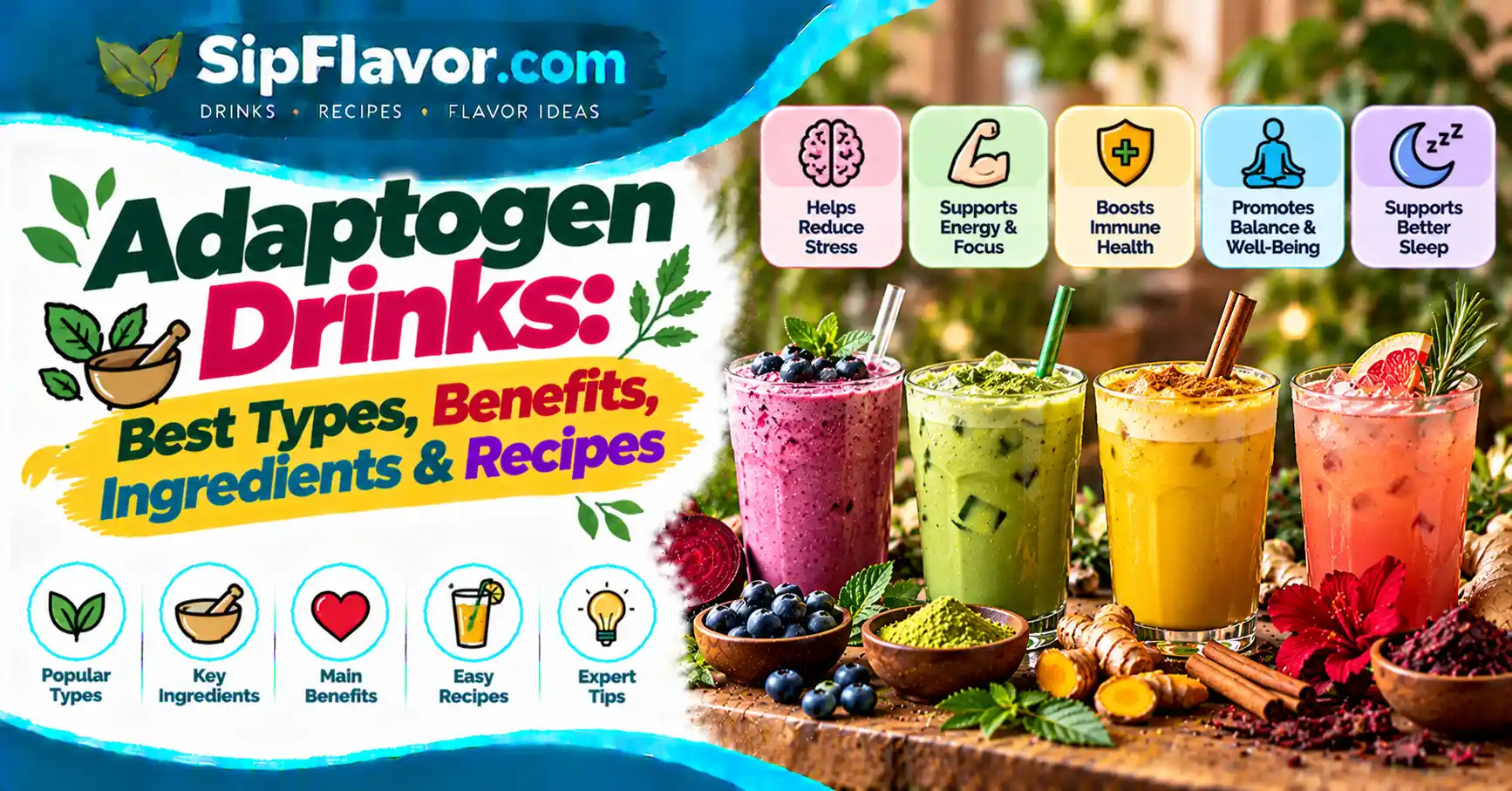
Adaptogen drinks are gaining attention among adults looking for alternatives to ordinary soda, coffee, and alcoholic beverages. These functional drinks contain botanical ingredients such as ashwagandha, reishi, rhodiola, and ginseng, often blended with tea, coffee, fruit, or sparkling water.
But not every adaptogen drink delivers its advertised benefits. Ingredient quality, quantity, caffeine content, and individual health needs all matter. This guide explains popular varieties, what scientific evidence suggests, easy drink ideas, and how to choose beverages responsibly.
Quick Answer
Adaptogen drinks are beverages containing herbs, roots, or mushrooms marketed to support the body’s response to stress. Popular types include ashwagandha tonics, reishi mushroom drinks, rhodiola teas, and ginseng beverages. Evidence for benefits varies, and not every product is appropriate for everyone.
TL;DR
• Best for familiar flavors: Adaptogen coffee and mushroom lattes. • Best sparkling format: Botanical seltzers. • Best warm option: Herbal tea blends. • Best alcohol alternative: Botanical mocktails. • Check carefully: Ingredient amounts, caffeine, and interactions. • Remember: Health claims aren’t guaranteed benefits.
What Are Adaptogen Drinks?
Adaptogen drinks are beverages containing certain plant or mushroom ingredients traditionally associated with stress adaptation. They may be sold as sparkling waters, teas, coffee alternatives, powders, or ready-to-drink tonics.
The term adaptogen is widely used in wellness marketing, but it isn’t a standardized FDA-approved beverage category. Some ingredients have limited clinical research, while others lack convincing evidence of benefits in finished drinks.
Common Ingredients in Adaptogen Drinks
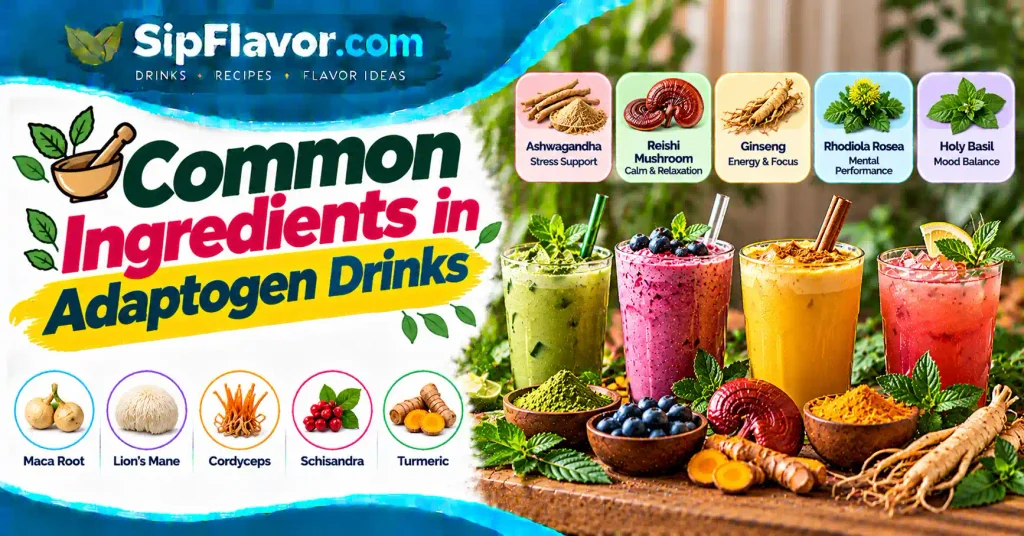
• Ashwagandha: A root used in traditional Ayurvedic practices. • Rhodiola: A botanical associated with traditional fatigue-related uses. • Panax Ginseng: A root found in various herbal preparations. • Holy Basil: Also called tulsi, used in herbal teas. • Schisandra: A berry used in traditional botanical formulations. • Reishi: A mushroom commonly marketed in wellness drinks. • Cordyceps: A fungus used in certain mushroom blends. • Eleuthero: Sometimes called Siberian ginseng, although botanically different.
Adaptogens vs. Nootropics
Adaptogens are traditionally associated with the body’s response to stress. Nootropics are substances marketed for attention, memory, or other cognitive functions.
Some beverage companies combine both categories. For example, L-theanine is often included in functional drinks, but it isn’t generally classified as a traditional adaptogen.
Ashwagandha Drinks
Ashwagandha drinks contain extracts from Withania somnifera, a plant used in traditional Ayurvedic medicine. Manufacturers add it to tonics, herbal blends, and powdered beverage mixes.
Some clinical research suggests certain ashwagandha preparations may help with stress or sleep. However, those findings cannot automatically be applied to every commercial beverage.
NCCIH
Popular Ashwagandha Drink Styles
• Ashwagandha Herbal Tea: Herbal infusion containing a measured commercial extract. • Ashwagandha Golden Milk: Warm milk with turmeric and an appropriately labeled preparation. • Ashwagandha Cacao: Cocoa-based drink containing ashwagandha. • Ashwagandha Berry Tonic: Berry-flavored ready-to-drink formulation. • Ashwagandha Vanilla Latte: Creamy vanilla drink with botanical extract. • Ashwagandha Coconut Drink: Coconut milk beverage with an herbal blend. • Ashwagandha Sparkling Water: Carbonated drink containing botanical ingredients. • Ashwagandha Chai: Spiced tea incorporating a labeled extract.
Important Safety Information
Ashwagandha may interact with thyroid medication, sedatives, immune-suppressing medications, and certain other drugs. Rare liver injuries have also been reported.
It should be avoided during pregnancy and breastfeeding. People with thyroid or autoimmune conditions should seek medical advice before using it.
NCCIH
Reishi Mushroom Drinks
Reishi mushroom drinks typically contain extracts from Ganoderma mushrooms. Reishi has a long history of traditional use and appears in coffee alternatives, herbal teas, and botanical beverages.
Its flavor is usually earthy and bitter, making cacao, cinnamon, and vanilla common pairings. Evidence remains insufficient to establish that commercial reishi beverages reliably improve stress, immunity, or sleep.
Reishi Drink Ideas
• Reishi Cacao: Cocoa creates a rich flavor that complements earthy extracts. • Reishi Coffee Alternative: Roasted grain or chicory base with reishi. • Reishi Vanilla Latte: Warm milk with vanilla and a commercial reishi blend. • Reishi Cinnamon Tea: Cinnamon-forward herbal drink with reishi. • Reishi Coconut Cacao: Coconut milk and cocoa with mushroom extract. • Reishi Chai: Warming spices balance mushroom bitterness. • Reishi Berry Tonic: Tart berry flavors with a prepared reishi formulation. • Reishi Iced Latte: Chilled milk and mushroom powder blended together.
What to Check
Look for the mushroom species, extract amount, and any third-party testing information.
People using anticoagulants, immunosuppressants, or other prescription medicines should discuss reishi products with a healthcare professional.
Lion’s Mane Mushroom Drinks
Lion’s mane drinks contain ingredients derived from Hericium erinaceus. This edible mushroom has attracted attention in functional coffee and mushroom beverage products.
Companies often market lion’s mane for focus and cognitive performance. Early research is interesting, but stronger human evidence is needed before making dependable benefit claims.
Popular Lion’s Mane Beverage Styles
• Lion’s Mane Coffee: Regular coffee blended with mushroom extract. • Lion’s Mane Cacao: Cocoa-based drink with a functional mushroom blend. • Lion’s Mane Vanilla Latte: Creamy vanilla beverage with mushroom ingredients. • Lion’s Mane Matcha: Matcha combined with a mushroom preparation. • Lion’s Mane Chai: Spiced tea with a botanical mushroom blend. • Lion’s Mane Iced Coffee: Chilled coffee with a prepared extract. • Lion’s Mane Oat Latte: Oat milk beverage with mushroom powder. • Lion’s Mane Mocha: Coffee, cocoa, and mushroom ingredients.
Does Lion’s Mane Improve Focus?
Some small human studies have explored cognitive outcomes, but findings are preliminary.
Also, a drink containing lion’s mane and caffeine may feel stimulating because of the caffeine, not necessarily because of the mushroom.
Cordyceps Mushroom Drinks
Cordyceps drinks contain fungal ingredients commonly marketed for physical performance or vitality. They often appear in mushroom coffees, powdered blends, and wellness tonics.
Cordyceps products differ by species, cultivation method, and extract concentration. Research on particular preparations doesn’t prove that every cordyceps beverage improves exercise performance.
Cordyceps Beverage Ideas
• Cordyceps Coffee: Coffee with a commercial cordyceps blend. • Cordyceps Mocha: Chocolate and coffee paired with mushroom extract. • Cordyceps Matcha: Green tea powder with cordyceps ingredients. • Cordyceps Vanilla Latte: Creamy vanilla and mushroom formulation. • Cordyceps Chai: Warm spiced tea with an extract. • Cordyceps Cacao: Cocoa-based mushroom drink. • Cordyceps Iced Latte: Cold milk beverage with a prepared blend. • Cordyceps Botanical Tonic: Ready-made herbal drink with cordyceps.
Important Considerations
Check whether the product also contains caffeine, ginseng, or other active botanicals.
Avoid assuming that a drink is caffeine-free simply because the label emphasizes mushrooms.
Rhodiola Drinks
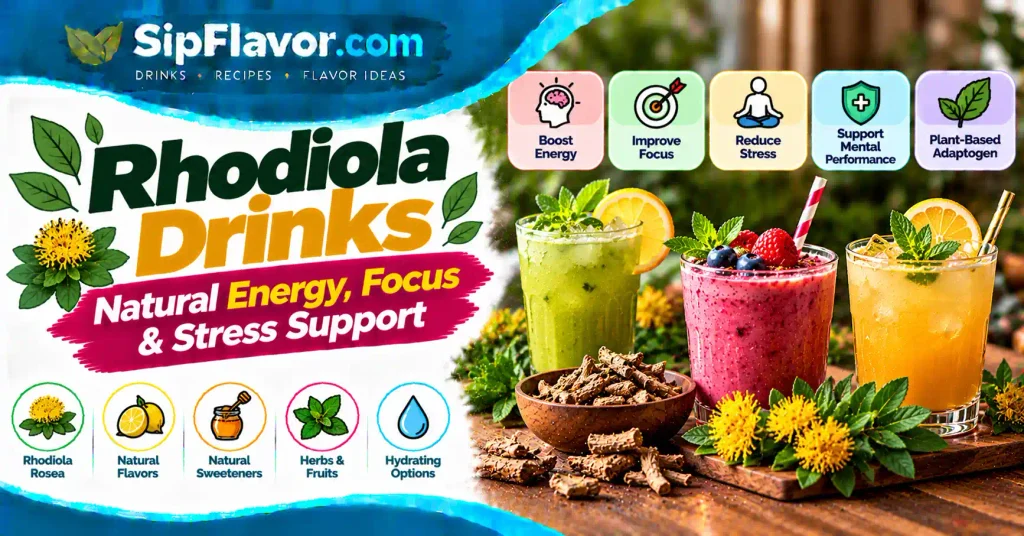
Rhodiola drinks contain ingredients derived from Rhodiola rosea, a plant traditionally used in parts of Europe and Asia. It appears in functional tonics, herbal preparations, and beverage blends.
Rhodiola is often marketed for fatigue and stress. However, evidence is mixed, and commercial products may contain different extracts or undisclosed amounts.
Rhodiola Beverage Styles
• Rhodiola Herbal Tonic: Ready-made beverage with a labeled extract. • Rhodiola Berry Spritz: Berry-flavored sparkling botanical drink. • Rhodiola Citrus Tonic: Lemon and orange flavors with rhodiola. • Rhodiola Iced Tea: Tea-based commercial botanical blend. • Rhodiola Ginger Drink: Ginger-forward tonic with herbal extract. • Rhodiola Pomegranate Spritz: Tart fruit flavor with rhodiola. • Rhodiola Mint Cooler: Mint-flavored botanical beverage. • Rhodiola Hibiscus Drink: Floral, tart hibiscus with a prepared blend.
Rhodiola Safety
Rhodiola may cause unwanted effects such as dizziness or dry mouth in some users.
Because interaction information is incomplete, consult a clinician before combining rhodiola with prescription medications.
Ginseng Drinks
Ginseng drinks are among the more established botanical beverage styles. Products may contain Panax ginseng, American ginseng, or other ingredients marketed under the ginseng name.
Different ginseng species are not interchangeable. Their chemical profiles vary, and research findings depend on the preparation studied.
Popular Ginseng Drink Ideas
• Ginseng Herbal Tea: Warm tea containing a labeled ginseng preparation. • Ginseng Honey Tonic: Honey-flavored botanical beverage. • Ginseng Lemon Tea: Citrus-forward ginseng tea. • Ginseng Ginger Drink: Spicy ginger paired with ginseng. • Ginseng Green Tea: Green tea blended with ginseng. • Ginseng Berry Tonic: Fruit-flavored ginseng beverage. • Ginseng Cinnamon Tea: Warm spice profile with ginseng. • Ginseng Sparkling Drink: Carbonated botanical tonic.
Ginseng and Caffeine
Ginseng itself isn’t caffeine, but many commercial ginseng drinks also contain tea or coffee.
Check the caffeine amount and other ingredients, especially if you take medication or have difficulty sleeping.
Adaptogen Herbal Teas
Adaptogen herbal teas are often marketed as convenient ways to enjoy botanical ingredients. They may contain tulsi, ginseng, schisandra, or prepared mushroom extracts.
Herbal tea flavors range from earthy and bitter to floral and sweet. However, not every herbal tea is adaptogenic, and traditional use doesn’t guarantee clinical benefits.
Herbal Tea Combinations
• Tulsi Ginger Tea: Peppery tulsi with warming ginger. • Tulsi Lemon Tea: Bright lemon with herbal notes. • Schisandra Berry Tea: Tart berry flavor in a botanical blend. • Ginseng Cinnamon Tea: Warm spice with ginseng. • Reishi Cacao Tea: Earthy mushroom extract with cocoa. • Rhodiola Citrus Tea: Citrus-flavored prepared herbal blend. • Tulsi Mint Tea: Fresh mint with tulsi. • Mixed Botanical Tea: Multiple herbs in a clearly labeled formulation.
Choosing Herbal Tea
Prefer products that identify each botanical and provide preparation instructions.
People who are pregnant, breastfeeding, or taking medications should check individual ingredients before consuming medicinal herbal blends.
Adaptogen Coffee Drinks
Adaptogen coffee drinks combine coffee with mushrooms, herbs, or other functional ingredients. Mushroom coffee is one of the most recognizable examples.
Some blends contain regular coffee, while others use chicory, roasted grains, or cacao. Their caffeine content can differ considerably.
Popular Adaptogen Coffee Styles
• Mushroom Black Coffee: Coffee combined with mushroom extracts. • Mushroom Latte: Espresso or coffee with milk and mushroom powder. • Mushroom Mocha: Coffee, cocoa, and a mushroom blend. • Vanilla Mushroom Coffee: Coffee with vanilla and functional mushrooms. • Iced Mushroom Coffee: Chilled coffee with a prepared extract. • Cinnamon Mushroom Latte: Mushroom coffee with cinnamon. • Oat Milk Mushroom Latte: Creamy plant-based coffee blend. • Decaf Mushroom Coffee: Decaffeinated coffee with mushroom ingredients.
Is Mushroom Coffee Better Than Regular Coffee?
Not necessarily. Regular coffee has a much larger research base than many mushroom coffee blends.
A mushroom coffee may contain less caffeine if it uses less coffee, but that depends on its formulation. Compare labels rather than assuming all mushroom coffees are healthier.
Adaptogen Matcha and Latte Drinks
Adaptogen matcha and latte drinks combine creamy textures with botanical ingredients. Matcha contributes a distinctive grassy flavor and naturally contains caffeine.
Milk-based drinks can help soften bitter herbal flavors. However, adding milk, vanilla, or honey doesn’t change the safety considerations of concentrated extracts.
Popular Latte Combinations
• Matcha Mushroom Latte: Matcha with a prepared mushroom blend. • Golden Milk Latte: Turmeric, cinnamon, and milk. • Vanilla Reishi Latte: Vanilla milk with reishi extract. • Cacao Mushroom Latte: Cocoa with a functional mushroom powder. • Cinnamon Oat Latte: Oat milk, cinnamon, and a labeled botanical blend. • Chai Adaptogen Latte: Spiced chai with a prepared herbal product. • Iced Matcha Botanical Latte: Chilled matcha with botanical ingredients. • Coconut Mushroom Latte: Coconut milk with mushroom extract.
Milk Alternatives
Oat, soy, almond, and coconut milk can work well in these drinks.
Choose unsweetened varieties when you want greater control over sugar. Check for dairy, soy, or nut allergens where relevant.
Sparkling Adaptogen Drinks
Sparkling adaptogen drinks resemble flavored seltzers or botanical sodas. They combine carbonated water with fruit flavors and selected plant ingredients.
These beverages are often positioned as alternatives to traditional soft drinks or alcoholic beverages. The presence of adaptogens doesn’t automatically make them more beneficial than ordinary sparkling water.
Popular Sparkling Flavor Combinations
• Lemon Ginger: Bright citrus with ginger spice. • Raspberry Hibiscus: Tart berries and floral hibiscus. • Peach Mint: Sweet peach with cool mint. • Blackberry Sage: Dark berries with herbal sage. • Grapefruit Rosemary: Bitter citrus with aromatic herbs. • Pineapple Lime: Tropical fruit with acidity. • Strawberry Basil: Sweet strawberry and fragrant basil. • Orange Vanilla: Creamy citrus flavor.
What About Ready-to-Drink Brands?
Brands such as De Soi, Moment, and Magic Mind have appeared in functional beverage comparisons. Their formulations, ingredient disclosures, and product types differ.
adaptogenbeverages.com
+1
Compare current ingredient labels before choosing a product. A sparkling beverage may also contain caffeine, CBD, or other active ingredients.
Adaptogen Mocktails and Alcohol Alternatives
Adaptogen mocktails are alcohol-free cocktail-style beverages containing botanical ingredients. They may resemble spritzes, margaritas, or bittersweet aperitifs.
Some consumers choose these drinks as alternatives to alcohol. However, certain products contain kava, CBD, THC, or other substances that require separate safety considerations.
Popular Botanical Mocktail Styles
• Citrus Botanical Spritz: Orange, lemon, and sparkling water. • Ginger Lime Mule: Ginger beer and fresh lime. • Berry Rosemary Fizz: Mixed berries with rosemary. • Grapefruit Mint Cooler: Grapefruit juice with mint. • Pineapple Ginger Spritz: Pineapple juice and ginger. • Hibiscus Citrus Mocktail: Hibiscus tea with orange. • Cucumber Basil Cooler: Cucumber juice with basil. • Pomegranate Tonic: Pomegranate juice and sparkling water.
Are Adaptogen Mocktails Intoxicating?
A beverage containing only ordinary culinary ingredients is generally non-intoxicating.
However, products with THC, kava, or other psychoactive substances may have meaningful effects. Always read the complete ingredient label.
Easy Homemade Adaptogen Drink Recipes
Homemade drinks offer greater control over flavor, sugar, and caffeine. However, concentrated adaptogen extracts require extra care because ingredient strengths differ.
The following measured recipes use ordinary food ingredients as their bases. They are adaptogen-friendly beverage bases, not therapeutic formulations. Add a commercial adaptogen product only after confirming its suitability and following its labeled directions.
Ginger Lemon Botanical Sparkler
Ginger Lemon Sparkler
1 serving
Prep: 5 minutes | Caffeine-free base
Ingredients
• ½ cup sparkling water • ¼ cup chilled ginger tea • 1 tablespoon lemon juice • 1 teaspoon honey, optional • ½ cup ice
Instructions
• Brew ginger tea and chill completely. • Combine the tea, lemon juice, and honey. • Fill a glass with ice. • Add the tea mixture and sparkling water. • Stir gently and serve.
Adaptogen option: Use a separately prepared, appropriately labeled botanical product only when suitable for you.
Creamy Mushroom Cacao Base
Mushroom Cacao Base
1 serving
Prep: 5 minutes | Warm drink
Ingredients
• 1 cup milk or unsweetened oat milk • 1 teaspoon unsweetened cocoa powder • ¼ teaspoon cinnamon • 1 teaspoon maple syrup, optional • ¼ teaspoon vanilla extract
Instructions
• Warm milk gently in a saucepan. • Whisk in cocoa powder and cinnamon. • Add maple syrup and vanilla. • Pour into a heat-safe mug. • Serve warm.
Adaptogen option: A commercial mushroom beverage blend may replace part of the base when used according to its label.
Iced Berry Hibiscus Cooler
Berry Hibiscus Cooler
1 serving
Prep: 5 minutes, plus chilling
Ingredients
• ½ cup chilled hibiscus tea • ¼ cup unsweetened cranberry juice • ¼ cup sparkling water • 1 teaspoon lime juice • ½ cup ice
Instructions
• Brew hibiscus tea and allow it to cool. • Combine the tea and cranberry juice. • Add lime juice. • Pour over ice. • Top with sparkling water and serve.
Variation: Replace cranberry juice with pomegranate juice for a different tart flavor.
These bases are also enjoyable without any added supplements.
Low-Sugar and Caffeine-Free Adaptogen Drinks
Low-sugar adaptogen drinks appeal to consumers who want botanical flavors without large amounts of added sweetener. Some products use fruit juice, while others contain sugar substitutes.
Caffeine-free options require closer inspection. A product marketed for relaxation may still contain green tea, coffee extracts, or other caffeine sources.
Lower-Sugar Drink Ideas
• Unsweetened Herbal Tea: Herbal infusion without added syrup. • Sparkling Lemon Water: Carbonated water with fresh lemon. • Ginger Mint Cooler: Chilled ginger tea with mint. • Unsweetened Cacao: Cocoa with plain milk. • Cucumber Lime Sparkler: Cucumber, lime, and sparkling water. • Hibiscus Iced Tea: Unsweetened hibiscus with ice. • Vanilla Oat Drink: Unsweetened oat milk and vanilla. • Citrus Botanical Tonic: Citrus-flavored drink without added sugar.
Reading Nutrition Labels
Check added sugars, total sugars, caffeine, serving size, and botanical ingredients.
Remember that zero sugar doesn’t necessarily mean zero caffeine or zero medication-interaction risk.
Adaptogen Drink Benefits, Side Effects, and Safety
Adaptogen drinks are frequently marketed for stress management, sleep, concentration, and physical resilience. These claims deserve careful evaluation because research varies between individual ingredients and preparations.
Some studies suggest potential benefits for particular extracts, but evidence for finished beverages is often limited. A small amount of an ingredient in a drink cannot automatically reproduce findings from a clinical trial.
Potential Benefits: What the Evidence Suggests
Stress: Certain ashwagandha preparations have shown promising results in studies. However, findings are not universal, and product quality varies.
Sleep: Some research suggests specific ashwagandha extracts may improve sleep measures. This doesn’t establish that every adaptogen beverage improves sleep.
Focus: Lion’s mane and rhodiola are being studied, but evidence remains preliminary.
Physical Performance: Cordyceps and ginseng have been investigated for exercise-related outcomes, with mixed or limited findings.
Possible Side Effects
Adaptogen ingredients may cause stomach upset, dizziness, drowsiness, allergic reactions, or interactions with medications.
Ashwagandha deserves particular caution because of thyroid-related concerns, medication interactions, and rare reports of liver injury.
NCCIH
Pregnant or breastfeeding people, children, and people taking prescription medications should avoid experimenting with concentrated botanical blends without appropriate medical guidance.
Adaptogen drinks should not replace medical treatment, sleep, nutritious meals, or established stress-management practices.
How to Choose and Store Adaptogen Drinks
Choosing an adaptogen beverage starts with understanding what the product contains. Attractive packaging and broad wellness claims reveal little about ingredient quality or effectiveness.
A clear label should identify botanical ingredients, quantities when applicable, caffeine content, serving information, and relevant warnings. Independent testing can provide additional reassurance about quality.
Adaptogen Drink Buying Checklist
• Ingredient Identity: Look for botanical names and specific extracts. • Ingredient Amounts: Prefer clearly disclosed quantities. • Caffeine Content: Check the amount per serving. • Added Sugar: Compare nutrition labels. • Third-Party Testing: Look for meaningful quality documentation. • Allergens: Check dairy, soy, nuts, and mushroom ingredients. • Medication Warnings: Review potential interactions. • Serving Size: Follow the product’s directions. • Manufacturer Transparency: Look for clear contact and sourcing information. • Expiration Date: Avoid expired products.
Storage Tips
Store unopened products according to their labels. Some require refrigeration, while shelf-stable cans can be stored in a cool, dry place.
Refrigerate perishable homemade beverages promptly at 40°F or below. Follow manufacturer guidance for opened products, and don’t assume that added botanical extracts extend shelf life.
FAQs
What are adaptogen drinks good for?
They are marketed for stress support, focus, and relaxation. However, evidence differs between ingredients, and benefits from finished drinks are not guaranteed.
Do adaptogen drinks really work?
Some individual botanical preparations have shown promising results in small studies. Many commercial beverages haven’t been tested as complete products.
Can you drink adaptogen beverages every day?
Daily suitability depends on the ingredients, amounts, medications, and personal health circumstances. There isn’t one universally safe daily schedule for all adaptogen drinks.
Are adaptogen drinks better than energy drinks?
Not necessarily. They contain different ingredients and serve different purposes. Some adaptogen beverages also contain caffeine, sugar, or other active substances.
Do adaptogen drinks contain alcohol?
Many are alcohol-free, particularly botanical mocktails and functional seltzers. Always check the label because product formulations vary.
Are adaptogen drinks safe during pregnancy?
Not all are safe. Ashwagandha, for example, should be avoided during pregnancy. Ask a healthcare professional before using concentrated herbal products.
What is the difference between adaptogen drinks and mushroom coffee?
Mushroom coffee is one type of functional beverage that may contain ingredients marketed as adaptogens. Adaptogen drinks also include teas, sparkling tonics, and other botanical beverages.
Conclusion
Adaptogen drinks offer a variety of beverage styles, including herbal teas, mushroom coffees, botanical lattes, sparkling seltzers, and alcohol-free mocktails. Their flavors and ingredients can make them interesting alternatives to everyday drinks, but their advertised benefits aren’t always supported by strong evidence.
Start by comparing ingredient labels, caffeine levels, sugar content, and safety warnings. For a simple introduction, try a homemade botanical-style drink without concentrated supplements, then make informed choices about any added extracts.
<ARTICLE_READY>